Best for
- Screened pool decks
- Patio paver sealing
- Shade and organic buildup
- Joint loss near drains and cage edges
Pool decks, patios & lanais
Paver cleaning, re-sanding and sealing for screened pool decks, patios and lanais in Yulee, Wildlight and nearby Nassau County communities.
Surface preparation before sealing.
ASTM C144 kiln-dried sand.
Two coats for Florida conditions.
Written workmanship and adhesion coverage.
Wet-area planning
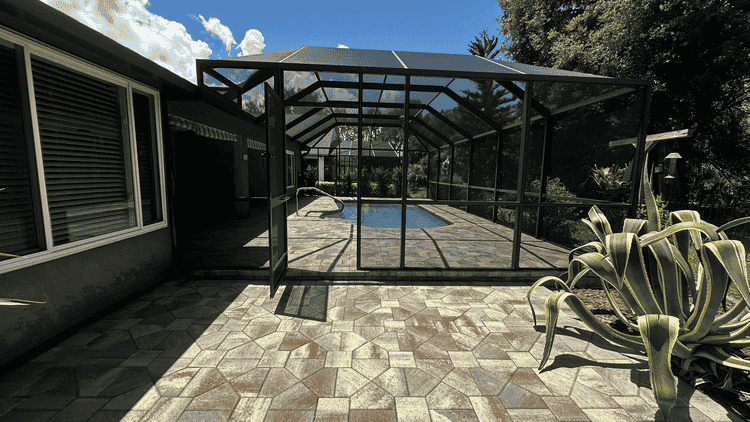
Screened pool decks and patios can hold moisture longer, receive less direct sun and collect organic buildup along cage edges, drains and shaded areas. The cleaning, dry-down, joint work and finish choice should reflect how the pool area is actually used.
Algae, mildew, dirt and organic residue are addressed before any joint work or sealer application.
Depleted joints near drains, cage edges and high-wash areas can be restored where the paver system and drainage conditions allow.
Sealer is applied only after the surface is prepared and dry enough for the selected system, with wet-area use and traction considered.

“HydroSeal did an excellent job cleaning and sealing our pool deck pavers. The difference is incredible, and they look like new again. They were professional, on time, and paid attention to every detail. I highly recommend HydroSeal for paver sealing!”
Diane R. · Google“Had to be the most professional job I ever had done. Greg was the best salesman and worker I have ever had. Job looks great!!! Above and beyond I ever imagined. I would recommend at anytime.”
Google Review“HydroSeal made our paver driveway look brand new. The color came back to life, the joints were properly sanded, and the finish was smooth and professional.”
Scott M. · GoogleWildlight focus
Wildlight homes use paver patios, walkways and screened outdoor living areas across both established and newer sections of the community. Those surfaces can develop low joints, fading, organic buildup and previous-sealer wear as they move through normal maintenance cycles.
Traction
Any wet paver surface can become slippery. Traction depends on surface texture, product, application rate, finish, contaminants and maintenance. Product selection and measured application matter around pools.
Natural-look and enhancing finishes create different appearance and feel. The actual paver surface and how the deck is used should guide selection.
Joints and drainage
Joint sand supports the paver system and improves the finished appearance, but it should not be used to conceal drainage or base failure. HydroSeal generally uses ASTM C144 kiln-dried joint sand with a compatible joint-stabilizing sealer.
Re-sanding is completed only where the paver system and drainage conditions are appropriate.
Verified patios and lanais
Rear paver hardscape is not universal across every new Yulee neighborhood, so we only make community-specific claims where the paver surface is actually documented.
Developer information identifies paver patios and screened-in patios, and current homes show screened paver lanais, extended rear paver patios and paver fire-pit areas. This is one of Yulee's strongest patio and lanai paver markets.
Current Del Webb homes advertise covered lanais with pavers, and resale examples document extended paver patios. These shaded and screened areas often need a different dry-down and cleaning plan than an open driveway.
Taylor Morrison specifications identify brick-paver lanais on applicable plans, along with other brick-paver exterior areas. Because the neighborhood is very new, many surfaces are still early in their maintenance life.
A documented 2024-built Hawthorne Park home includes a private paver patio with a covered porch, confirming that paver outdoor-living areas extend beyond Del Webb within Wildlight.
Paver use is mixed rather than universal. Individual Tributary homes are documented with paver patios, and some include brick-paver driveways with screened paver lanais.
Sandy Ridge has substantial covered rear lanais, but the rear surface has not been verified as a standard paver installation. We therefore limit Sandy Ridge paver claims to the verified driveway, walkway and front-porch areas.
Questions
Concrete and brick pool deck paver cleaning, re-sanding and sealing starts at $1.50 per square foot, while travertine and natural stone start at $1.60 per square foot. Final pricing depends on the deck size, screen-enclosure access, coping detail, joint-sand loss, staining, previous coatings, repairs, shade and moisture conditions. Failed sealer, heavy efflorescence or extra restoration can add preparation. Send photos and approximate square footage and we can usually identify the likely scope before the final quote is confirmed.
Screen enclosures can reduce direct sun and airflow, so pavers around a pool may stay damp longer than an open driveway. Shade, humidity, splash-out, nearby landscaping and low spots can all slow dry-down. Sealing before the surface and joints are ready can contribute to whitening, clouding or adhesion problems. We evaluate actual moisture and weather conditions instead of forcing every pool deck onto the same schedule.
Yes, when the surface, moisture conditions and sealer system are appropriate for a wet pool environment. Saltwater and chlorine splash-out, sunscreen oils and frequent rinsing can increase wear around coping and high-traffic areas. The goal is not to create a thick glossy film; it is to use controlled application and a compatible system that protects the pavers while keeping pool-deck use and maintenance in mind. A quality sealer improves resistance to pool-area exposure, but no coating should be treated as chemically indestructible. Concentrated chlorine or other pool chemicals should be rinsed rather than allowed to sit on the sealed surface.
Any wet paver surface can become slippery, so traction has to be considered around a pool. Slip risk depends on the paver texture, finish, application rate, contaminants and maintenance. Pool decks are treated differently from driveways, and we avoid excessive product buildup in walking areas. The selected finish should protect the surface without chasing a heavy wet-look coating that can reduce traction.
Yes, where the joints are depleted and the drainage system is suitable. Pool decks often lose sand near drains, screen-cage edges, downspout paths and areas that are frequently rinsed. After cleaning, we restore low joints as needed using ASTM C144 kiln-dried joint sand with a compatible joint-stabilizing sealer. We do not pack sand into areas in a way that blocks drainage or hides a base problem.
White or chalky residue can come from mineral salts moving through the pavers as moisture evaporates, while a cloudy white film can also be related to an older sealer or trapped moisture. Those are different problems and should not automatically receive the same treatment. We inspect the condition first, use appropriate cleaning or treatment when practical and allow proper dry-down before deciding whether the deck is ready to seal.
Foot traffic is generally kept off the freshly sealed deck for about 24 hours. Normal pool use is commonly delayed about 24–48 hours, and shaded or screened areas may need longer depending on humidity, airflow, weather and the sealer system. Furniture should also stay off until the surface has had adequate cure time. HydroSeal provides site-specific return-to-use guidance after the project.
Often, yes. Pool decks deal with UV, water, organic material, sunscreen and repeated wet/dry cycles. Proper sealing can improve appearance, protect the surface and stabilize joints when the deck is prepared and dry enough for the selected system.
There is no universal schedule. Pool chemistry, sun exposure, traffic, screen enclosure and previous sealer all affect wear. A two-to-three-year inspection cycle is sensible in Florida, but the condition of the deck should determine whether another coating is actually needed.
It can. Covered patios and screened lanais may receive less direct UV than open driveways, but they still experience humidity, moisture, organic buildup and joint-sand loss. Protected areas can also dry more slowly, so actual moisture and condition matter when deciding when to seal or reseal.
No. Furniture should generally stay off newly sealed pavers for approximately 24–48 hours so the coating can cure without marks or pressure points. Shade, humidity and weather can extend that window, so project-specific cure instructions control.